Selling inherited jewelry, coins and precious metals
If you have inherited jewelry, coins or silver, you don’t need to identify or sort everything before asking for help. Keep things as you found them, agree as a family what to keep, photograph what you might sell and send it for a preliminary estimate. Collectible pieces are reviewed before anything is treated as metal, and nothing is sold until you accept a final offer.
On this page
First steps with inherited jewelry and coins
-
Keep everything together, as you found it
Don’t clean coins, polish silver or break up sets. Keep the boxes, coin albums, receipts, certificates and any old appraisals with the items: they help identify what you have.
-
Agree who decides
If the estate is still being settled, check with the executor or the estate’s attorney before anything is sold. One family member as the contact keeps photos, questions and offers in one place.
-
Set aside what the family wants to keep
Decide on heirlooms first. Selling some pieces now and others later is fine, so nobody has to choose under pressure.
-
Make a simple list
Note what each piece is, how many, and any marks you can see. The inventory form (PDF) has columns for this; a plain list works too.
-
Photograph and ask for a preliminary estimate
Lay pieces on a plain, light surface, add close-ups of marks, and send up to 10 photos with a description. A person replies with a preliminary estimate, a single amount or a range.
-
Decide what to sell, then ship
If you go ahead, after reviewing your items we’ll email your shipping label and instructions. The itemized final offer follows inspection and testing, and you decide whether to accept it.
Handling an estate professionally?
Executors, estate attorneys, liquidators and auction houses selling on behalf of an estate can find business details on our page for estate professionals and auction houses.
This guide is for families selling their own inherited jewelry, coins and silver.
What you might find, and how to handle it
Inherited jewelry and keepsakes usually arrive mixed together. A first sort by type makes photos and descriptions easier; it doesn’t need to be perfect.
| Item | Look for | Before you sell |
|---|---|---|
| Gold jewelry | 10K, 14K, 18K or 417, 585, 750, often inside ring bands or near clasps | Photograph the marks. Leave stones in place; stones set in jewelry are evaluated case by case. |
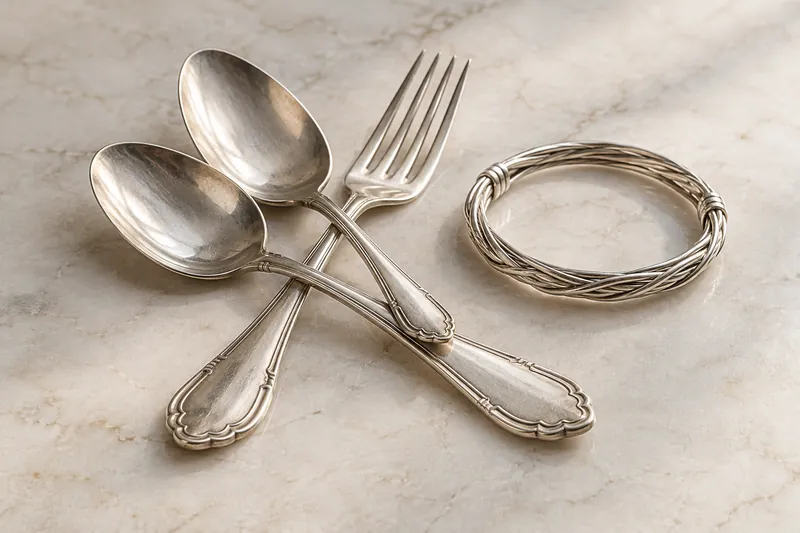
| Sterling flatware and holloware | “Sterling” or 925; candlesticks marked weighted; knives with hollow handles | Count the pieces and don’t polish. Weighted pieces and hollow-handle knives are valued on recoverable silver. |
| Coins in albums, folders or rolls | Country, date, denomination and mint mark | Don’t clean them or take them out of albums. Photograph each page or a sample of each roll. |
| Graded coins | A sealed plastic holder with a label and certification number | Leave the coin in its holder and photograph the label. |
| Bars and rounds | A stamped weight and purity, such as 1 oz .999 | Keep any packaging or assay card and photograph serial numbers. |
| Plated and costume pieces, watches | GF, GP, RGP, HGE, EP or EPNS marks, or no mark on a base metal | Set them aside: plated, gold-filled and costume pieces and watches are outside what we buy. If you can’t tell, include a photo and ask. |
Not sure what a mark means? The weight, purity and metal value guide explains karats and fineness marks, and What we buy lists every category.
Sentimental, collectible and metal value
Inherited jewelry and coins can carry three kinds of value. Sentimental value is the family’s to judge, which is why keeping heirlooms comes first. Collectible or resale value comes from the maker, age, design, rarity or condition of a piece: signed or antique jewelry, older coins and notable silver can be worth more as they are than as metal. Metal value is the pure gold, silver, platinum or palladium a piece contains.
At AuPMB, coins, bullion and notable pieces are reviewed for collectible or resale value first, case by case, with outside specialists when an item calls for it. Melting happens only under the authorization in your signed agreement, and only for items being sold as metal. The itemized offer shows which basis was used for each item.
A preliminary estimate or a purchase offer is not a formal appraisal. If you need an appraisal for estate, insurance or tax records, ask the executor or your adviser which kind is required.
Coins in the collection?
Our guide to how coins and bullion are evaluated explains authentication and when a coin is worth more than its metal. You don’t need to identify every coin first.
Records and taxes
Keep the itemized final offer and your payment record for each sale of inherited jewelry or coins: together they show what was sold, its tested weight and purity, and the amount received. If you sell in stages, keep one set per shipment.
Selling inherited property can have tax consequences. Under IRS Publication 551, the basis of inherited property is generally its fair market value on the date of death, or on the alternate valuation date if the estate’s representative chose one. IRS Topic 409 says net capital gains from selling collectibles, such as coins, are taxed at a maximum 28% rate.
General information, not tax or legal advice. Ask a tax professional about your situation.
Near Houston, or between Austin and San Antonio?
In Houston, appointments are offered after we review your items; they are appointment-only, with no walk-ins. From Austin to San Antonio, we offer mobile buying appointments: we evaluate your items, explain our offer and, if you accept, complete the purchase and issue payment during the appointment. Houston appointment details · Mobile buying
Questions families ask about inherited jewelry
Do we need to know what everything is?
No. Photograph what you have, including marks, and describe what you know. Purity is established by testing on arrival, and unmarked pieces are tested like any other.
Can we sell some pieces now and the rest later?
Yes. Each shipment is evaluated and offered on separately, so you can sell inherited jewelry and coins in stages.
What if we want to keep something after seeing the offer?
Offers normally cover the whole shipment. Partial acceptance can be arranged; ask when you receive the offer, and we explain how the declined items are returned.
How long does it take once the items arrive?
The final offer normally follows the same or the next business day; items that need specialist review take longer, and we tell you. Payment follows within one to two business days of acceptance.
Photo estimate, then final offer
How selling works
Nothing ships until we have reviewed your items and emailed your shipping label, and nothing is sold until you accept the final offer.
-
Preliminary estimate from photos
Send photos and a short description. A person replies with a preliminary estimate — a single amount or a range. It tells you whether shipping is worthwhile; it is not an offer.
-
Your label, then insured shipping
If you go ahead, after reviewing your items we’ll email your shipping label and instructions. Eligible shipments get a free prepaid insured FedEx label; there is no fixed minimum.
-
Final offer after inspection
We inspect and test the actual items and send an itemized final offer. Accept it and payment follows within one to two business days; decline it and your items are returned under the agreement.
In Houston, appointments are offered after we review your items; they are appointment-only, with no walk-ins. From Austin to San Antonio, we offer mobile buying appointments. Houston appointment details · Mobile buying
Ready when you are
Tell us what you have. We’ll take it from there.
Upload a few photos and a short description. You’ll hear back from a person, not an automated quote.