Sell estate lots of precious metals
AuPMB buys estate lots of jewelry, coins, bullion and sterling from executors, estate attorneys, estate liquidators and auction houses anywhere in the U.S., by mail, including pieces held back from auction or left unsold. Send photos and a description with your firm’s name for a preliminary estimate. Collectible pieces are reviewed before anything is treated as metal, and the itemized final offer follows inspection and testing.
Same form as individual sellers: add your business or firm name.
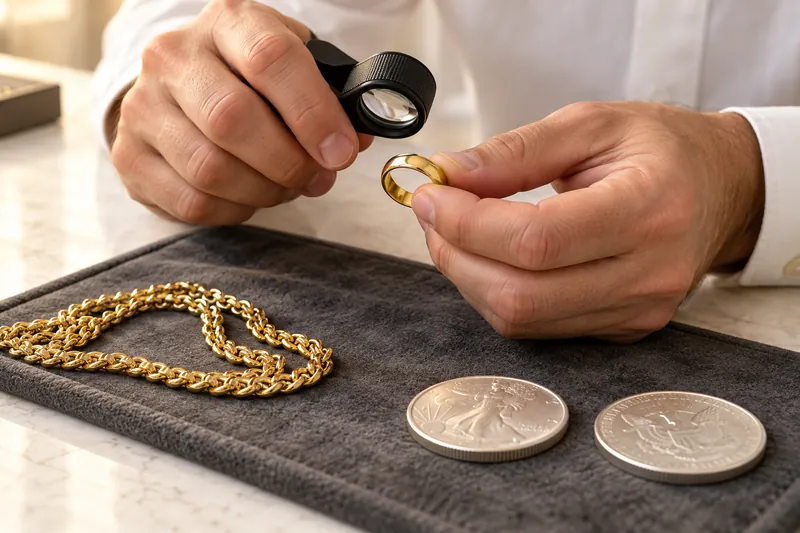
What estate lots can include
- Gold, platinum and palladium jewelry, wearable or broken
- Sterling flatware, including hollow-handle knives, and solid silver bowls and trays
- Weighted silver pieces, such as candlesticks
- Coins, bars and rounds, from a few pieces to a whole collection
- Pieces that didn’t sell at auction, or aren’t worth cataloguing
Stones set in jewelry are evaluated case by case. Hollow-handle knives and weighted pieces are valued on recoverable silver; filler and steel blades are excluded from the silver weight.
Usually left out
Silver-plated, gold-filled and gold-plated items and watches are outside what we buy. If you can’t tell how an estate piece is marked, include it in the photos and say what you know; the final offer follows inspection and testing.
Under the FTC Jewelry Guides, 16 CFR §23.5, silver-plated pieces may not be marked “sterling”; a sterling or 925 mark is a useful first sort.
Collectible value comes before metal value
Estates often hold pieces worth more than their metal: signed or antique jewelry, older or graded coins, notable silver. Coins, bullion and notable pieces are reviewed for collectible or resale value first, case by case, with outside specialists when an item calls for it.
Melting happens only under the authorization in the signed agreement, and only for items being sold as metal. You decide what goes in the lot: if the best pieces are going to auction, send the rest.
Selling for your own family?
Heirs handling a relative’s jewelry and coins themselves can start with our guide to selling inherited jewelry, coins and precious metals.
Working through estate lots
Estates are rarely cleared in one pass. These habits keep each shipment straightforward.
Photograph by category
Jewelry, coins, flatware and bullion in separate photos, with close-ups of marks and makers’ names. An inquiry takes ten photos; describe the rest.
Use your inventory
If you have an estate inventory or a consignment list, paste the relevant lines into the description: counts, weights and marks.
Sell in stages
Each shipment is evaluated and offered on separately, so estate lots can go as rooms or consignments are cleared. Auction houses with steady unsold lots can sell on a recurring basis, discussed after the first evaluation.
One itemized offer per shipment
Each final offer lists every item or lot with its weight, test findings and amount, priced at the market when it is prepared, so you can see how each part was valued.
Questions estate professionals ask
How long do estate lots take once shipped?
The final offer normally follows the same or the next business day after the package arrives; items that need specialist review take longer, and we tell you. Payment follows within one to two business days of acceptance.
Can some pieces be kept back after we see the offer?
Offers normally cover the whole shipment. Partial acceptance can be arranged; ask when you receive the offer, and we explain how the declined items are returned.
Do we need to identify every piece first?
No. Photograph what you have, including marks, and describe what you know. Purity is established by testing on arrival, and unmarked pieces are tested like any other.
Can a large estate in Texas be seen in person?
In Houston, appointments are offered after we review the items, for example for larger lots; they are appointment-only, with no walk-ins, so start with photos. From Austin to San Antonio, we offer mobile buying appointments, with purchase and payment at the appointment if you accept our offer.
Photo estimate, then final offer
How to sell estate lots by mail
Nothing ships until we have reviewed your items and emailed your shipping label, and nothing is sold until you accept the final offer.
-
Preliminary estimate from photos
Send photos and a short description. A person replies with a preliminary estimate — a single amount or a range. It tells you whether shipping is worthwhile; it is not an offer.
-
Your label, then insured shipping
If you go ahead, after reviewing your items we’ll email your shipping label and instructions. Eligible shipments get a free prepaid insured FedEx label; there is no fixed minimum.
-
Final offer after inspection
We inspect and test the actual items and send an itemized final offer. Accept it and payment follows within one to two business days; decline it and your items are returned under the agreement.
In Houston, appointments are offered after we review your items; they are appointment-only, with no walk-ins. From Austin to San Antonio, we offer mobile buying appointments. Houston appointment details · Mobile buying
Ready when you are
Tell us what you have. We’ll take it from there.
Upload a few photos and a short description. You’ll hear back from a person, not an automated quote.