Sell coins and bullion
AuPMB buys gold, silver, platinum and palladium coins and bullion, plus selected collectible base-metal coins, by mail from anywhere in the U.S. Every coin is reviewed for collectible value before anything is valued as metal. To sell coins, send photos of both sides: a person replies with a preliminary estimate, and the final offer follows inspection.
Collectors, inheritors, dealers and other businesses welcome.
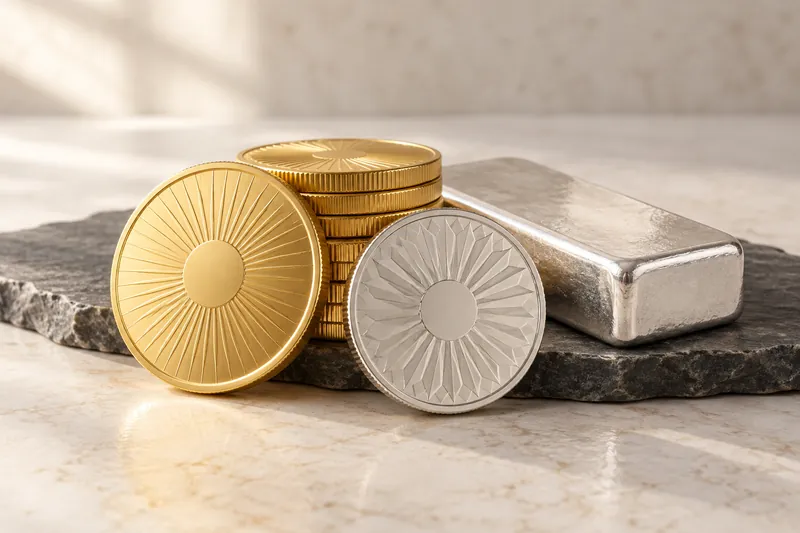
Coins and bullion we buy
Whether you want to sell coins one at a time, a full collection or a dealer’s inventory, these are the categories we buy.
Gold coins
Bullion coins such as American Gold Eagles and Canadian Gold Maple Leafs, and older U.S. and world gold coins.
Silver coins
Silver bullion coins, U.S. dimes, quarters and half dollars dated 1964 and earlier, 40% silver Kennedy half dollars from 1965–1970, and world silver coins.
Platinum and palladium coins
American Platinum and Palladium Eagles and other platinum or palladium bullion coins.
Bars and rounds
Minted and cast bars and rounds in gold, silver, platinum and palladium, with or without original packaging or assay cards.
Graded coins
Precious-metal and collectible coins in third-party grading holders. Leave them in the holder.
Selected collectible base-metal coins
Some copper, nickel and other base-metal coins have collectible value. We evaluate these case by case and buy selected pieces.
Metal value or collectible value
A bullion coin is valued mainly for the metal it contains. A collectible coin can be worth more because of its date, mint mark, rarity, condition or grade — sometimes far more than its metal.
That is why we never treat a coin as metal by default. Each coin is authenticated and reviewed for collectible or resale value first, case by case, and your itemized offer shows which basis we used. Nothing collectible is altered without your approval.
Many circulated base-metal coins are worth only face value. If a coin is outside what we buy, we say so in our reply.
| Coin | Metal content |
|---|---|
| American Gold Eagle | 22 karat (91.67% gold); the 1 oz coin contains one troy ounce of gold |
| Canadian Gold Maple Leaf | 99.99% gold (since 1982) |
| American Silver Eagle | 99.9% silver |
| Canadian Silver Maple Leaf | 99.99% silver |
| American Platinum Eagle | 99.95% platinum |
| American Palladium Eagle | 99.95% palladium (issued since 2017) |
| U.S. dimes, quarters, half dollars, 1964 and earlier | 90% silver |
| Kennedy half dollars, 1965–1970 | 40% silver |
Sources: 31 U.S.C. §5112 (American Eagles), the U.S. Mint (90% and 40% silver coinage) and the Royal Canadian Mint (Maple Leafs).
Before you sell coins
- Don’t clean them. Cleaning can permanently reduce a coin’s collectible value. Send them as you found them.
- Leave graded coins in their holders and photograph the label, including the certification number.
- Keep bars in their packaging or assay cards, and photograph any serial number.
- Photograph both sides of each coin. For rolls, tubes and bags, give a count and photograph a sample.
- Tell us what you know — country, year, denomination, and whether the coins came from a collection or an estate.
How coins are evaluated
Weight, dimensions and markings are checked against known specifications as part of evaluating authenticity. XRF reads the metal content at the surface without damaging the coin. Coins that call for it go to outside specialists, and we tell you if that affects timing.
Selling an inherited collection?
You don’t need to identify every coin first. To sell coins from an estate, photograph the collection as it is, including albums, folders and any paperwork, and we review it from there. Our guide to selling inherited jewelry, coins and precious metals covers the practical steps.
Photo estimate, then final offer
How to sell coins and bullion by mail
Nothing ships until we have reviewed your items and emailed your shipping label, and nothing is sold until you accept the final offer.
-
Preliminary estimate from photos
Send photos and a short description. A person replies with a preliminary estimate — a single amount or a range. It tells you whether shipping is worthwhile; it is not an offer.
-
Your label, then insured shipping
If you go ahead, after reviewing your items we’ll email your shipping label and instructions. Eligible shipments get a free prepaid insured FedEx label; there is no fixed minimum.
-
Final offer after inspection
We inspect and test the actual items and send an itemized final offer. Accept it and payment follows within one to two business days; decline it and your items are returned under the agreement.
In Houston, appointments are offered after we review your items; they are appointment-only, with no walk-ins. From Austin to San Antonio, we offer mobile buying appointments. Houston appointment details · Mobile buying
Ready when you are
Tell us what you have. We’ll take it from there.
Upload a few photos and a short description. You’ll hear back from a person, not an automated quote.